
The Man Behind the Music, by Susie Campbell
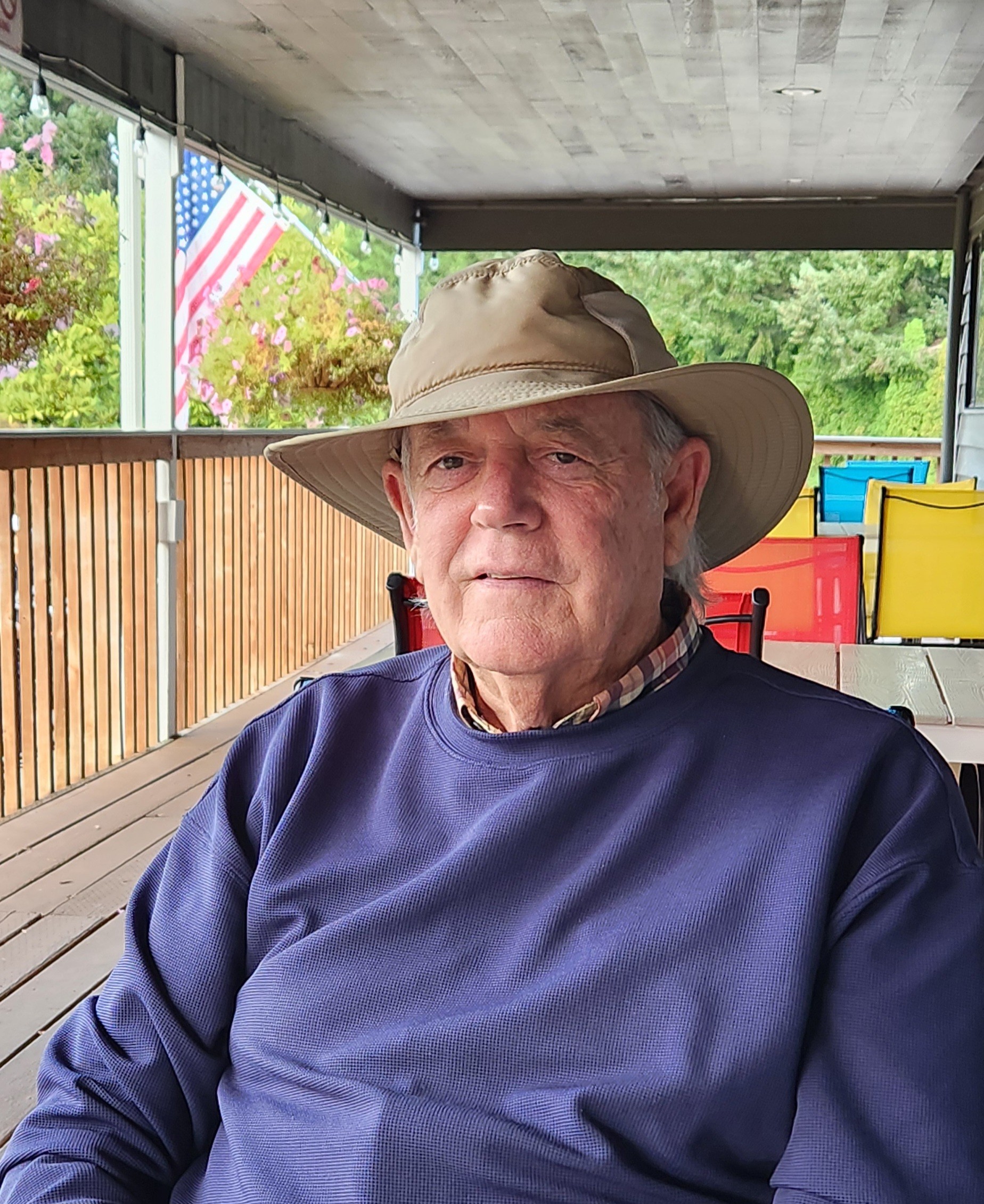
Meet Mike Mitchell. He is often seen at Kimball Coffeehouse, and other Gig Harbor music venues, wearing his signature hat. Mike has been organizing the annual Rockin’ Rhythm and Blues Festival at the Gig Harbor Sportsman’s Club since 2018 as a benefit for the Permission to Start Dreaming Foundation, an organization that helps veterans and others recover from PTSD. Music and helping veterans suffering from PTSD are 2 of Mike’s passions. Blending the two makes the perfect combination for him to apply his skills at promoting live music and raising funds for good causes.
Mike relates to veterans suffering from PTSD because he, too, has suffered from the condition since his return home from the Vietnam war in 1968. Having sought help from the VA and other sources, he eventually found an independent group of other vets who offered counseling for vets by vets. He completed a 7-month treatment program which helped him learn how to manage his symptoms. It made such a huge difference in his life that he was inspired to help other vets find some relief and healing.
In addition to the help he received from his veterans’ support group, music played a big part in his return to normalcy. In fact, Mike says that “music saved my life when I got home.” Soon after returning from Vietnam, he began organizing the Old Town Blues Festival in Tacoma, which he continued doing for 25 years. That festival included 8 stages located at Old Town Park and various venues nearby including The Spar Tavern, Slovenia Hall, The Mountaineers, and the former Home Organ Society Hall. “Everyone loved the blues in Tacoma in the ‘90’s.”
Mike became a booking agent for his own production company, Night on the Town Productions. He started booking acts at venues in Tacoma including the Red Carpet/aka: the Breakthru, the Temple Theater and the UPS Field House, creating benefits for non-profit causes. One such cause was Zoobilee, an organization that supports animal care and wildlife conservation at Point Defiance Zoo & Aquarium. He served on their board in addition to raising funds for them. Another cause was the Breast Cancer Resource Center in Tacoma. The Susan G. Komen Foundation provided over $100,000 a year to this Center for many years, up until 2012. With the loss of that funding the Center had to close.
Shortly thereafter, Mike was at the Tides Tavern in Gig Harbor where met a woman named Leslie Mayne who had started this organization called Permission to Start Dreaming. He told her about his blues festival in Tacoma. Finding a cause that fit his passion for helping veterans suffering from PTSD struck a chord for Mike. He then began to convert the Old Town Blues Festival to a benefit in support of Leslie Mayne’s P.T.S.D. Foundation. Mike has been a board member of the organization for over 10 years now. In 2018 he moved the festival to the Gig Harbor Sportsman’s Club and renamed it the Rockin’ Rhythm and Blues Festival. The Sportsman’s Club has been very supportive of the cause of helping veterans who suffer from PTSD, as many of their members are also veterans.
Going back to the genesis of his love of music takes us to his home in North Tacoma where he grew up near the University Puget Sound campus. When his father died, when Mike was just 5 years old, his mother raised her four children as a single parent. She was a singer, violin and piano player and part time stage actress in local theater productions. She made the arts a requirement in their household. They even had a music room which included various instruments, and a dance floor for tap dancing. As a young boy Mike took piano lessons for 3 months, but didn’t like it. So, he took up tap dancing in elementary school.
When he would go over to his cousins’ house, the older girls were listening to Elvis, Fabian, Ricky Nelson, Conway Twitty and other artists of the day. He loved it. When Mike started Jr. high school, at Jason Lee Jr. High, he met a kid named Tiny Marzano. Mike and Tiny “hit it off instantly.” Tiny lived in the Hilltop neighborhood. The Hilltop neighborhood at that time was mostly populated by black and Italian families. One day at Tiny’s house he said to Mike, “Do you love music?” Mike: “I love music.” Tiny: “What do you think of this?” and he showed him an album. The album was James Brown Live at the Apollo Theater. Mike says that album “changed his life.” About a month later James Brown came to the 38th St. Sports Arena in Tacoma.
Now, Tiny and Mike, two 14-year-olds, didn’t have any money to buy concert tickets, but they were determined to see live music. They found ways to sneak into concerts. They got to see the Wailers, and other acts at the Tacoma Armory. To get into the University of Puget Sound Field House they developed a technique of climbing up a drain pipe that led to the men’s restroom on the second floor. Climbing through a window, they could then head downstairs to the concert hall to see the shows. Thinking they could use this strategy for the James Brown concert, they headed over to the 38th Street Sports Arena. When they got there the entry area was a sea of black fans waiting for the doors to open. They scurried around to the back of the building hoping to find a drainpipe to climb that would get them into the building. No luck. However, there was a couple out back having a smoke and talking. Mike noticed that the woman was dressed very provocatively. She caught a glimpse of them stalking around and said, “What are you two white boys doing here?” They enthusiastically replied, “We’re here to see James Brown!” She then told them to follow her and led them through a side door into the empty arena, and placed them front and center at the edge of the stage. When the arena filled, the curtains opened, and the opening act came on stage, there was their benefactor and her companion, Ike and Tina Turner.
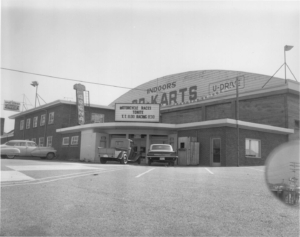
This building at 38th and South Tacoma Way played host to dozens of concerts by local rock bands, including several “battle of the bands” events. Built in 1946 as the Tacoma Ice Palace, it boasted one of the largest ice-skating rinks in the region and could seat nearly 4,000 spectators. The rink was used by the Tacoma Rockets of the Pacific Coast Hockey League from 1946-1952. In 1964, a new dance floor was installed, and the building was renamed “Tacoma Sports Arena.” Local bands such as the Wailers, Sonics, Galaxies, and the Viceroys, made frequent appearances, alongside musicians from outside the region, including James Brown and Three Dog Night. Photograph courtesy Tacoma Public Library.
As a young teen, Mike’s younger cousin, Steve Foster, started taking him to the Red Carpet Club in Tacoma every Friday and Saturday night because Mike had a driver’s license, and Steve didn’t. The owners of the club were Don and Donna Consola. When Donna first saw Mike at the club she surprised him by calling him by name. Confused as to how she knew who he was, she told him that she used babysit him as a baby to age 5, when his dad died. Small world. Mike became a regular at the Red Carpet Club, helping out where needed, eventually booking acts for the club. Sometimes he would spend the night sleeping there in a little back room. He did this until he got drafted. While he was away in Vietnam, the Consolas decided to remodel the club and expand into the adjacent space. They then renamed the club The Breakthru, as they broke through the wall to expand.
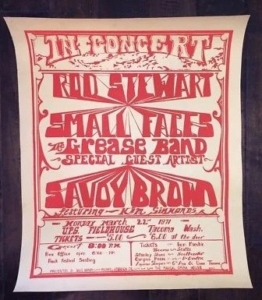
After he got home from Vietnam and started booking acts around Tacoma, he followed Don Consola’s example at the Breakthru of bringing in national acts. In 1971 he and a group of investors and volunteers managed to get an act from the famous William Morris agency to play at the UPS Field House. It was a U.S. tour of three up-and-coming British acts, Savoy Brown, The Grease Band (with Joe Cocker) and The Small Faces (with Rod Stewart). The concert was held on March 22, 1971. This was a big accomplishment for Mike.
Mike continued to be successful in the music industry, all the while holding down a regular bill-paying job with his own painting company. Being outside and moving around worked well for him and kept him on an even keel. He did that until he retired. But the music scene changed when disco became popular. It virtually killed live music.
Later in life he took guitar lessons with his brother. His brother gave it up after three lessons, but Mike’s teacher convinced him that if he could learn 5 “cowboy chords” he could play hundreds of songs. His Monday night lessons eventually evolved into a regular jam lesson with 5 guys. Mike suggested they form a band and play some gigs. He looked around the circle and said they could be “The Blonds” because all of their guitars were blonde-faced acoustics. With his booking skills he got gigs for them at places around Tacoma, like the Spar. They were rather unique in being an acoustic blues band. They lasted 5 years, then decided it was time to go on to other things.
In December 1992 one of Mike’s good friends, Ron Gardner from The Fabulous Wailers, passed away at the age of 45. Ron was a lead singer/songwriter and saxophone player for the Wailers from 1962-1969, when the band broke up. During the Christmas season Mike sold Christmas trees at two lots that he had in Tacoma. He got Ron to come and work with him to make a little money. There was a motorhome parked on the lot by a south Tacoma bowling alley near Tacoma Community College. Ron liked to be nice and warm and kept the thermostat turned up. When he ran out of propane in the motorhome, he brought in several space heaters to keep warm. Tragedy struck when one of the heaters caused a fire in the motorhome and Ron perished inside. The Seattle Times reported the incident: Ex-Member Of Wailers Dies Of Fire Injuries | The Seattle Times
https://archive.seattletimes.com/archive/19930319/1691299/ron-gardner-fans-honor-him-with-music
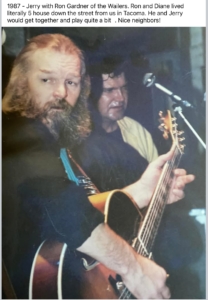
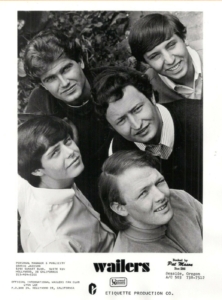
Mike and a group of friends decided to arrange a memorial for Ron, and a fundraiser for his family. He booked some bands to play at the Temple theater including Gabriel, The New Blues Brothers, Jumbo Groove, Merrilee Rush and other special guests. The show sold out quickly and was covered by all of the local TV stations.
https://archive.seattletimes.com/archive/19921225/1532009/ex-member-of-wailers-dies-of-fire-injuries
In person, Mike seems to be a calm, quiet guy, not one to draw attention. He graciously agreed to let me interview him and was very open and easy to talk to. He has lots of stories to tell about the music scene in Tacoma from the past through today. He’s still very much a part of keeping the music alive. Thank you, Mike for telling your story, and for your support of live music.
Susie Campbell